Homes for Travel
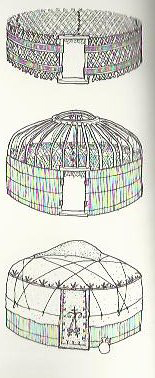
Before the existence of RV’s, double-wide mobile homes and “tiny “houses which can be towed by pickups, nomadic peoples throughout the world constructed shelters which they could easily dismantle and take with them.
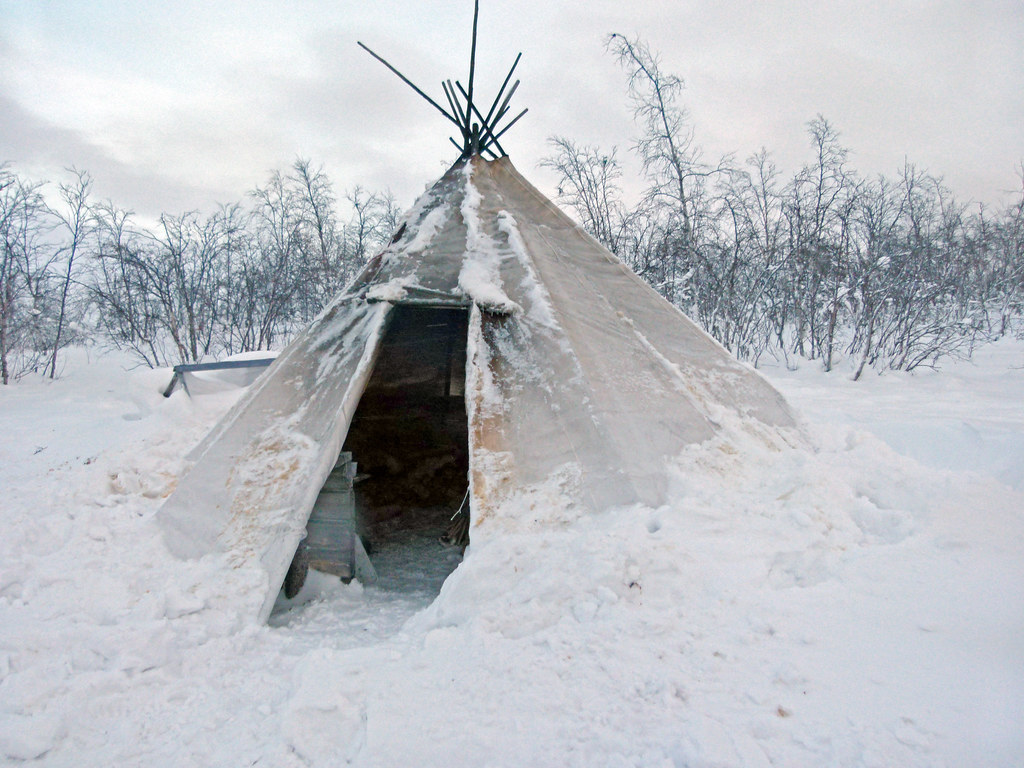
The Lavvu is a temporary structure used by the Sami people of Northern Scandinavia enabling them to follow reindeer herds. It is constructed by three or more evenly spaced poles which are notched forming a tripod for support, then ten or more straight poles are laid up against the tripod. There is no need for stakes or ropes or center pole to provide stability. Reindeer hides were used to cover the lavvu until the mid 1800’s until British textiles were made available. Inside the living quarters of the lavvu there is a fireplace in the middle which is used for heating with a smoke hole at the top of the structure which is usually left open.
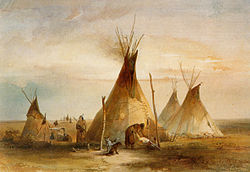
The Plains Indians of North America erected tipis as they followed herds of bison. Using multiple “lodge” poles 12-15 feet in length which are tied together at the end and raised upright and adjusted on the ground, the tipi is nearly ten feet in diameter. Tanned (and untanned) buffalo skins are sewn together and their lower edges are secured to the ground by tent pegs. There is a central fire pit and an extra skin at the top to be opened to facilitate the escape of smoke. Tipis were easily set up and dismantled to allow camps to be moved. The poles of the structure were used to assemble a dog pulled travois upon which additional poles and the coverings were placed.
Leave a Reply