Buttons- Part One
Button-Button Who’s Got the Button?
This is an old children’s game. In one version a group of players are sitting in a circle with
one player in the center. The object of
the game is to pass a button amongst the players undetected by the player in
the center of the circle. The players
constantly move their hands as if they were passing the button to add
difficulty
one player in the center. The object of
the game is to pass a button amongst the players undetected by the player in
the center of the circle. The players
constantly move their hands as if they were passing the button to add
difficulty
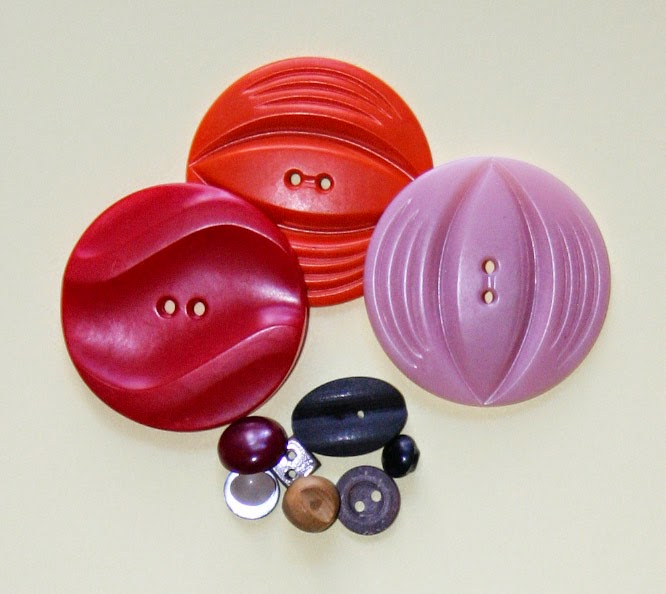
Buttons are common textile elements. These ordinary closure
items are often overlooked, until one goes missing and a replacement is
needed. However, there are many
beautiful buttons, antique and modern that
add great interest to clothing and textile art.
items are often overlooked, until one goes missing and a replacement is
needed. However, there are many
beautiful buttons, antique and modern that
add great interest to clothing and textile art.
Originally, textile historians tell us that buttons found in
ancient Egypt, Greece and Persia, were not intended to hold garments together,
but rather, used as embellishments and badges of rank. Made of metal, stone and shell they date
from circa 2,000BCE .
ancient Egypt, Greece and Persia, were not intended to hold garments together,
but rather, used as embellishments and badges of rank. Made of metal, stone and shell they date
from circa 2,000BCE .
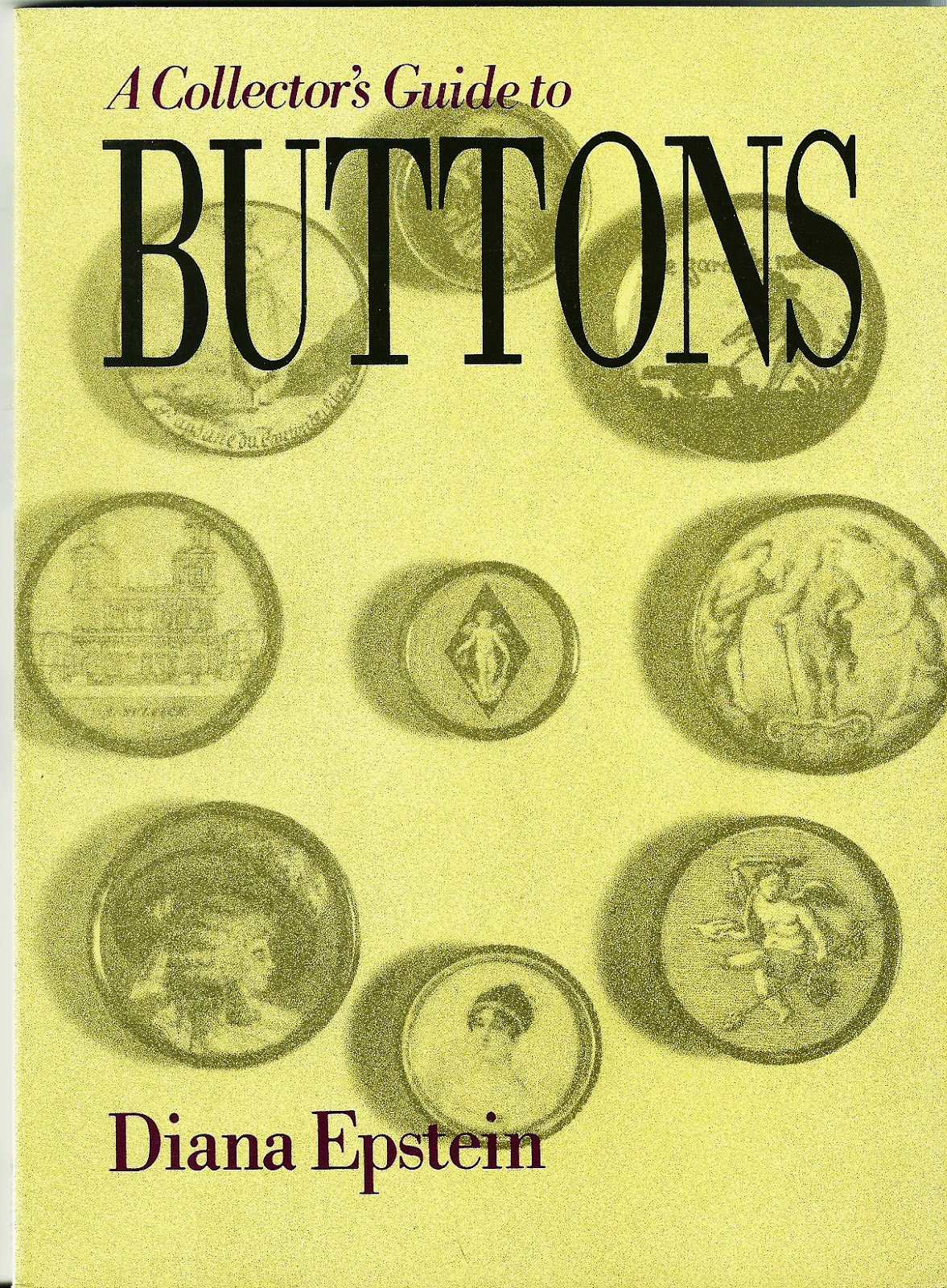
A Collector’s Guide to Buttons, Diana Epstein,
Walker and Co., NY, 1990
In the 13thC buttons appeared in Europe. Diana Epstein (Collector’s Guide to Buttons)
indicates “Etienne Boileau, Provost of Paris, established laws governing the
guilds of French craftsmen, which included rules and penalties for
buttonmakers.”
indicates “Etienne Boileau, Provost of Paris, established laws governing the
guilds of French craftsmen, which included rules and penalties for
buttonmakers.”
Today, buttons are collected as objects of textile-related
art, some examples fetching goodly prices. There are numerous resources
available for the would-be collector, including the National Button Society, www.nationalbuttonsociety.org. Occasionally, one can find copies of Just
Buttons Magazine which was published monthly by the Just Button Museum of
Southing, Conn. from 1944-1979.
art, some examples fetching goodly prices. There are numerous resources
available for the would-be collector, including the National Button Society, www.nationalbuttonsociety.org. Occasionally, one can find copies of Just
Buttons Magazine which was published monthly by the Just Button Museum of
Southing, Conn. from 1944-1979.
It is common for collectors to classify buttons by materials
(shell, rubber, pewter, glass, for example) while others limit their
collections to a specific color or button shape, or limited editions of novelty
or commemorative buttons .
(shell, rubber, pewter, glass, for example) while others limit their
collections to a specific color or button shape, or limited editions of novelty
or commemorative buttons .
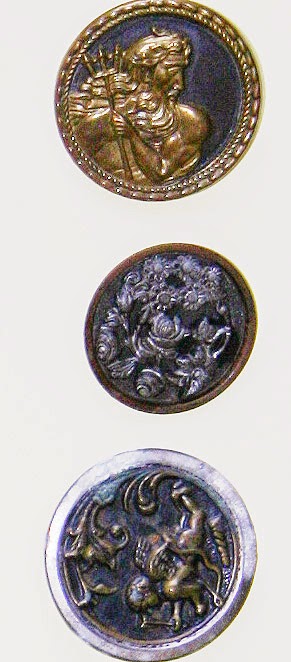
Stamped metal buttons. Top button has a celluloid backing.
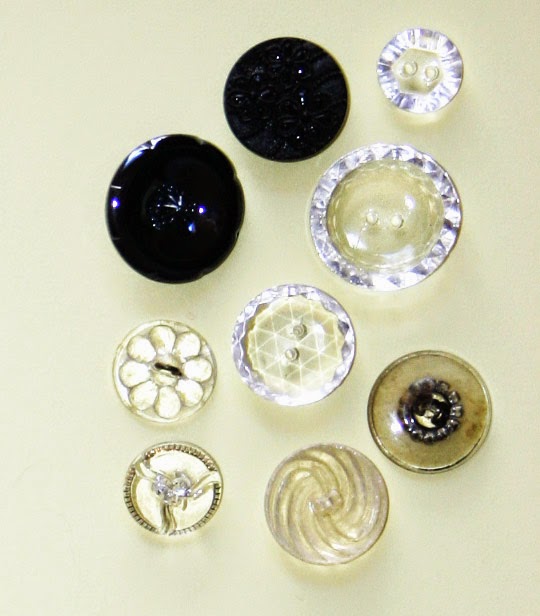
Glass buttons
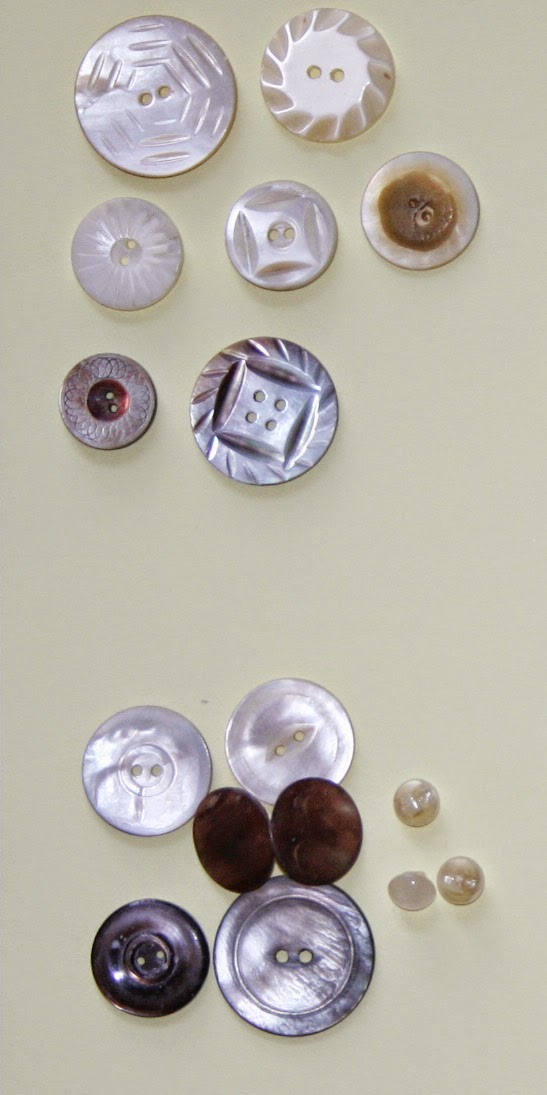
 Etched mother-of pearl and shell buttons
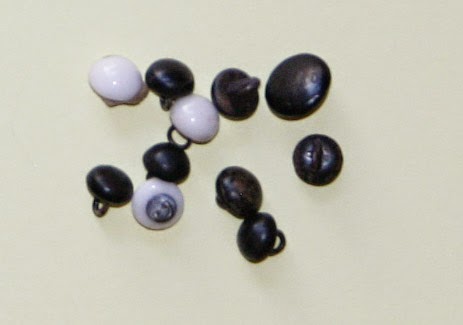
 Shoe and glove buttons
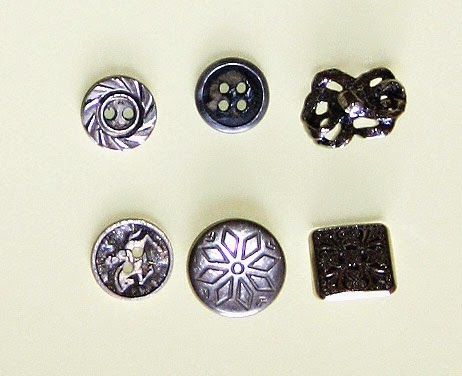
Pewter buttons
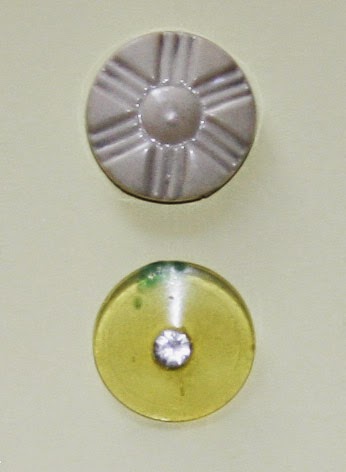
Celluloid buttons
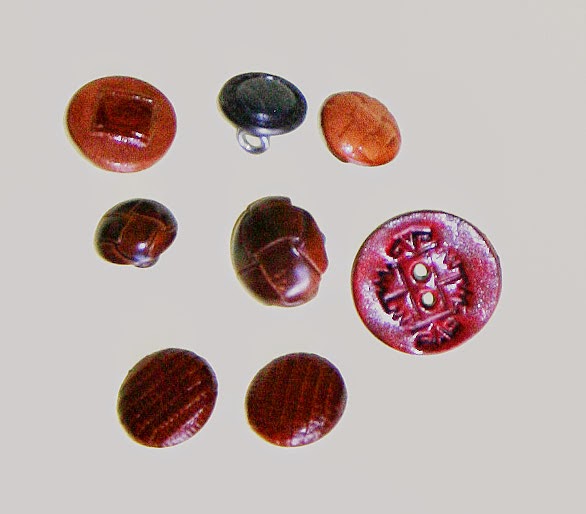
Stamped/ braided leather buttons
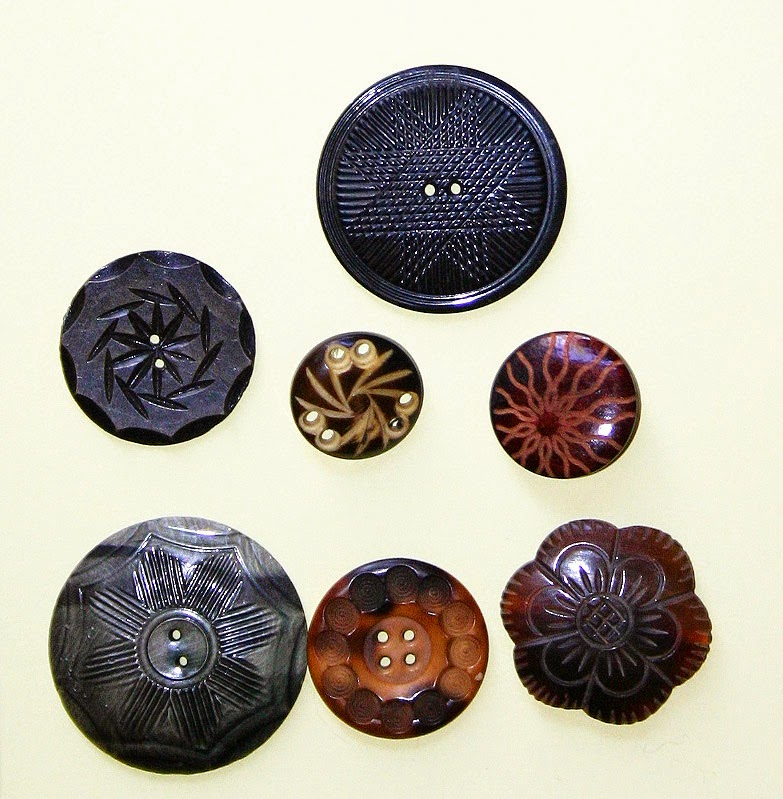
Etched buttons, many different materials, including vegetable ivory
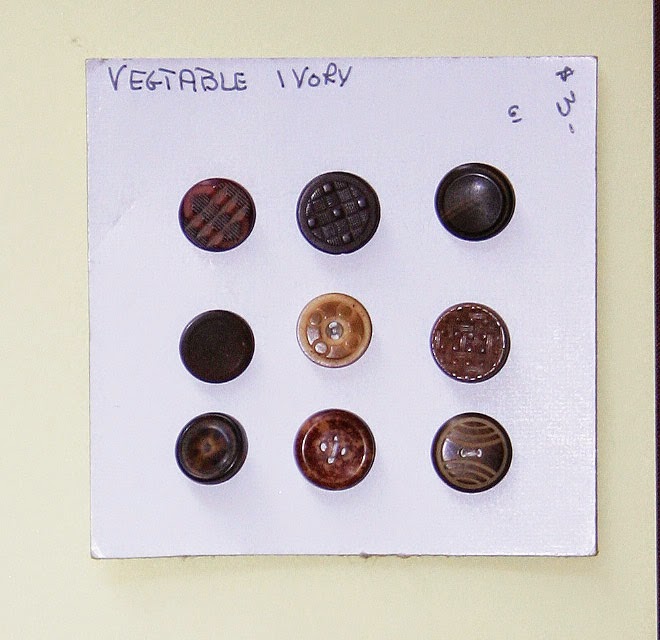
Vegetable Ivory comes from the Tagua nut (S.A.). After processing the material had an ivory color as in true ivory making it a very popular material fro buttons in the last part of the 19thC. Reportedly, there is a move to save the Tagua trees from the burning of the rain forests and, perhaps, we will see small cooperatives making these buttons in the future.
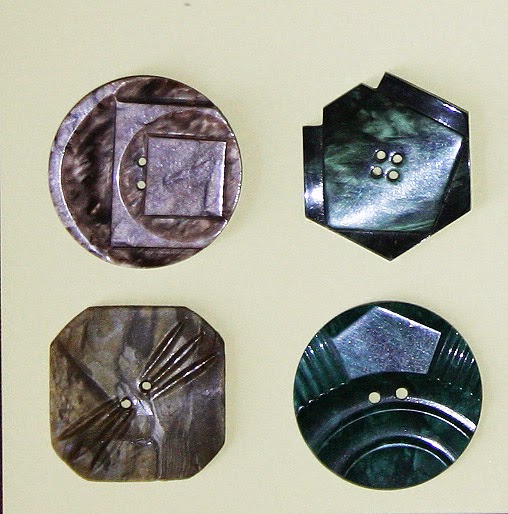
Art Deco Buttons
Next week, in Buttons Part Two we will look at modern buttons and discuss a few “button” trivia.
Leave a Reply